Advertisement

luxury

95: Rabdan

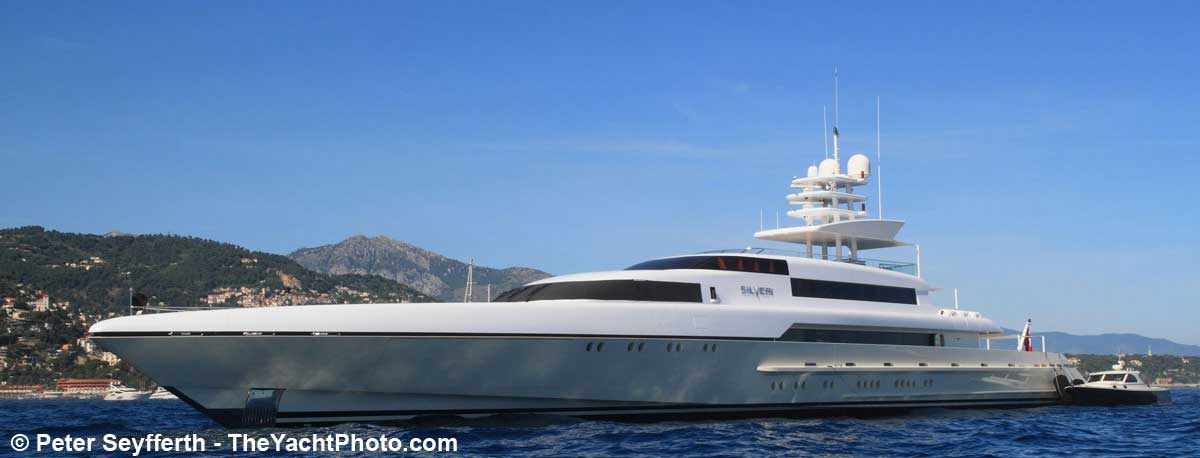
Espen Øino designed this slender and swift semi-displacement yacht, which claimed the title as the world’s longest aluminum motoryacht until the arrival of sistership Silver Zwei, now Dragonfly. The vessel has an aircraft-style interior and displaces just 540 tons, which means that—powered by twin MTU 4000 16V diesels—Rabdan can cross the Atlantic at a swift 18+ knots.
94: Dragonfly

After her launch in 2009, this slender and contemporary aluminum yacht appeared in Abu Dhabi in time for the Grand Prix. Watchers soon discovered she was none other than Hull No. 2 of Hanseatic Marine’s innovative series (the ex Silver Zwei). Hull No. 1, formerly known as Silver and now called Rabdan, was already in the United Emirates as a new royal yacht.

93: Siren

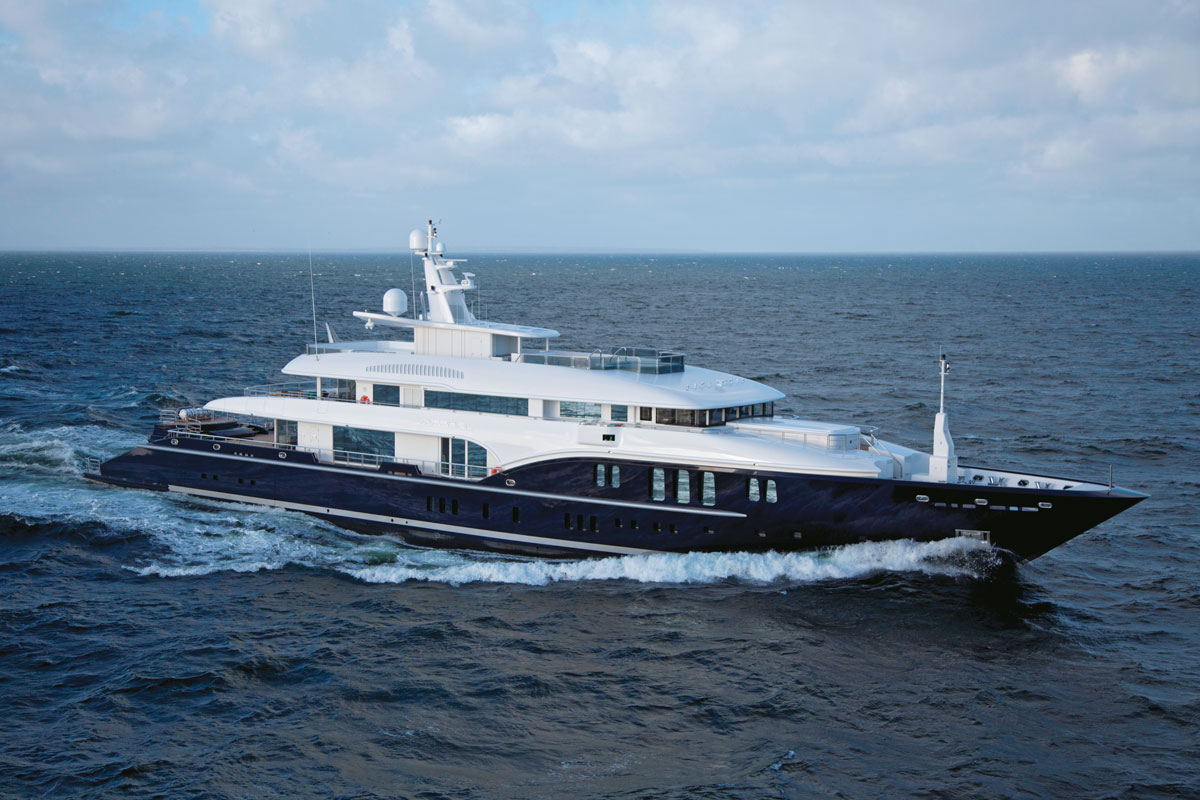
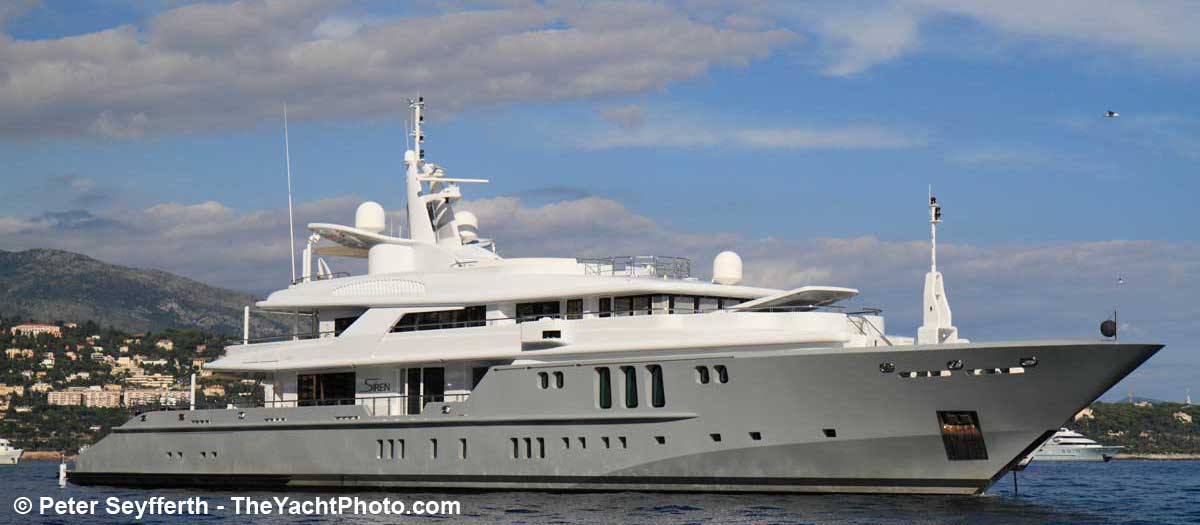
Hamburg-based Newcruise designed Siren inside and out, as they did sistership Sapphire and the slightly smaller Triple Seven. Built with transoceanic capability, Siren has a steel hull, aluminum superstructure and reaches a maximum speed of 17.5 knots with a range of 5,000nm thanks to twin MTU 16V4000M60 engines producing 4,520 bhp.

92: Sapphire

If this yacht reminds you of Siren it is no coincidence. These yachts share elegant styling by Newcruise and engineering by Nobiskrug. Nobiskrug’s hull 781 was listed for sale for around $115 million during construction and was reportedly sold for about $110 million to new owners last year through Edmiston.

91: Mogambo

What sets apart the world’s very largest yachts? In the case of the new Nobiskrug Mogambo, certainly, sophistication does. Like it or not, the slightly masculine contemporary décor by Reymond Langton Design using two primary woods (sycamore and ebonized walnut) is nothing short of perfection.

90: Graffiti

She is one of a beautiful series of yachts all built on the same platform at the Nobiskrug shipyard. She was known as project 783 (Mogambo, also on this list, was project 782). She has an interior by Raymond Langdon. The resemblance is not a casual one. Kristal Waters built these sisterships, designed, according to their marketing materials, to fill a niche at the top end of the market.

89: Pegaso

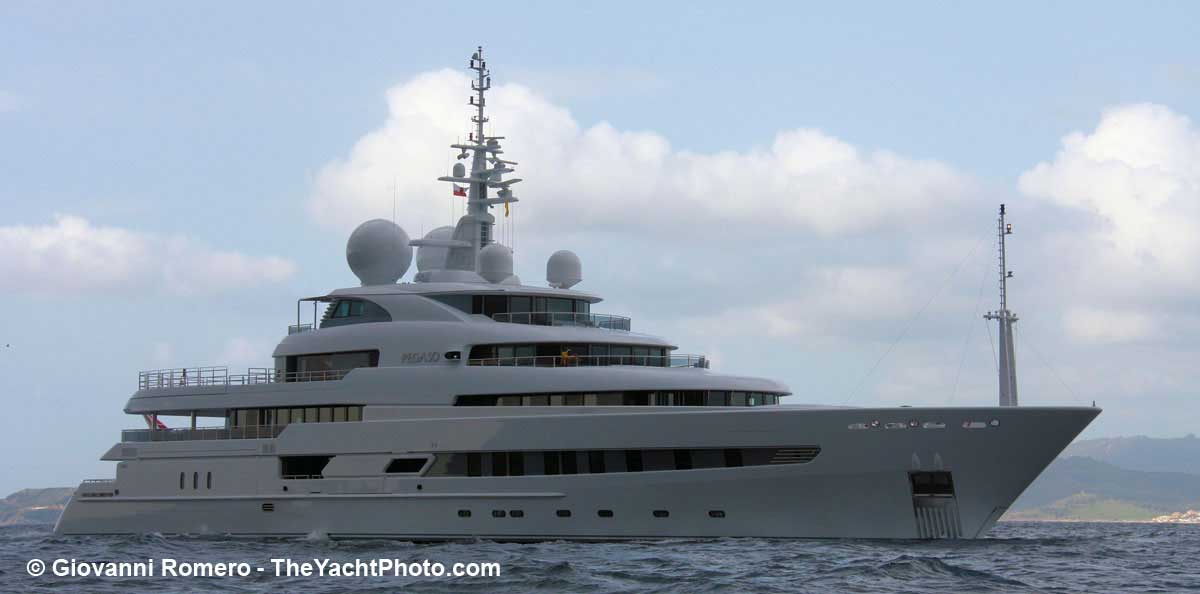
Located in Vigo, Spain, the Freire Shipyard, established by Paulino Freire in 1895, specializes in commercial shipbuilding (tugs, fishing boats, patrol vessels, etc.). Little wonder, then, that this expedition-style vessel first managed to avoid scrutiny. Still, the very private Pegaso eventually had to take to the water, which meant that yacht enthusiasts everywhere would try to find out about her.

88: Ilona

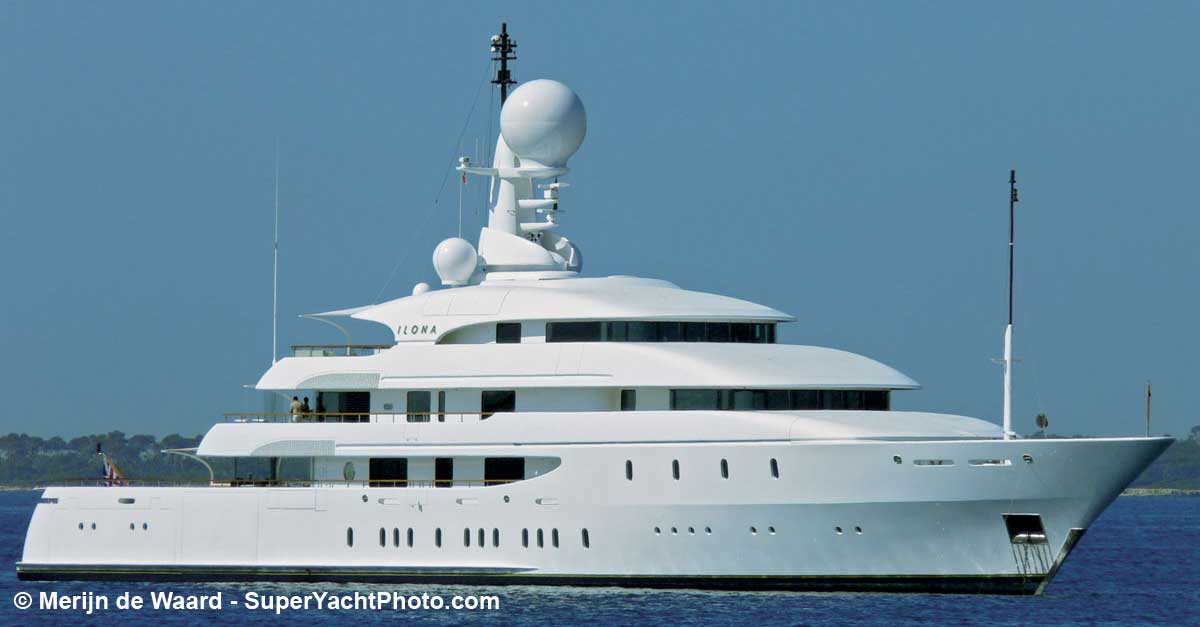
Ilona is a well-traveled yacht, extensively photographed from Europe to the Far East, which is not surprising as her owner is an experienced yachtsman. Amels won a bid to build the Australian owner’s new yacht and the shipyard worked closely with project manager Captain Elworth to provide custom features such as a helipad that converts to a hangar.

87: New Horizon

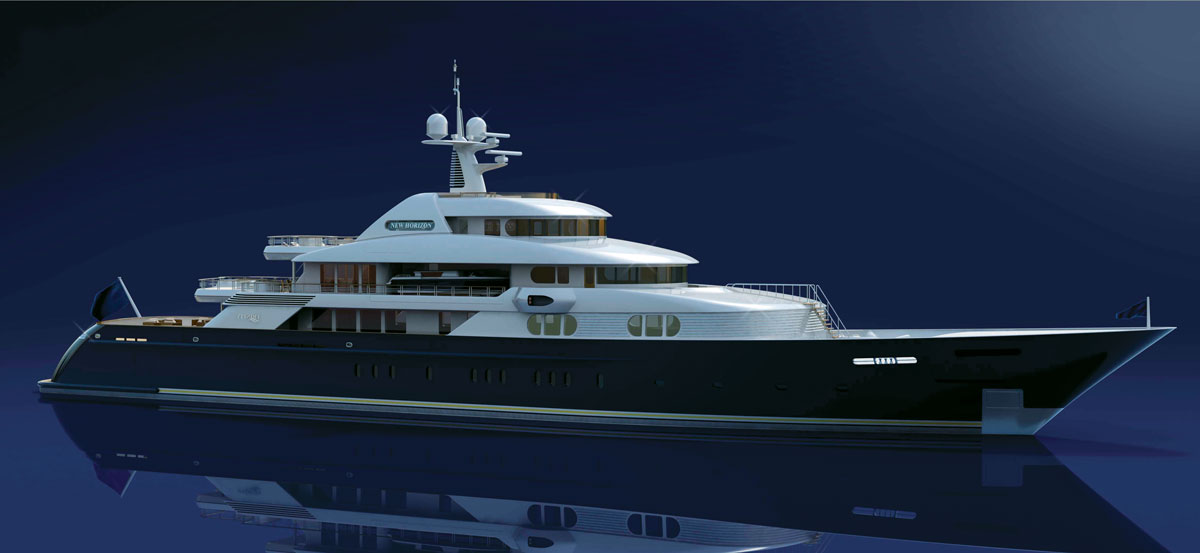
Trinity Yachts set out to build private yachts a mere 14 years ago in its hometown of New Orleans and opened a second shipyard in nearby Mississippi in 2005 to meet the demand. While at first Trinity’s founding partners set out to fill a niche by building yachts in the 150-foot or so range, the shipyard has since built a number of much larger yachts, many in all aluminum and more recently in steel and with aluminum superstructure.

86: Enigma

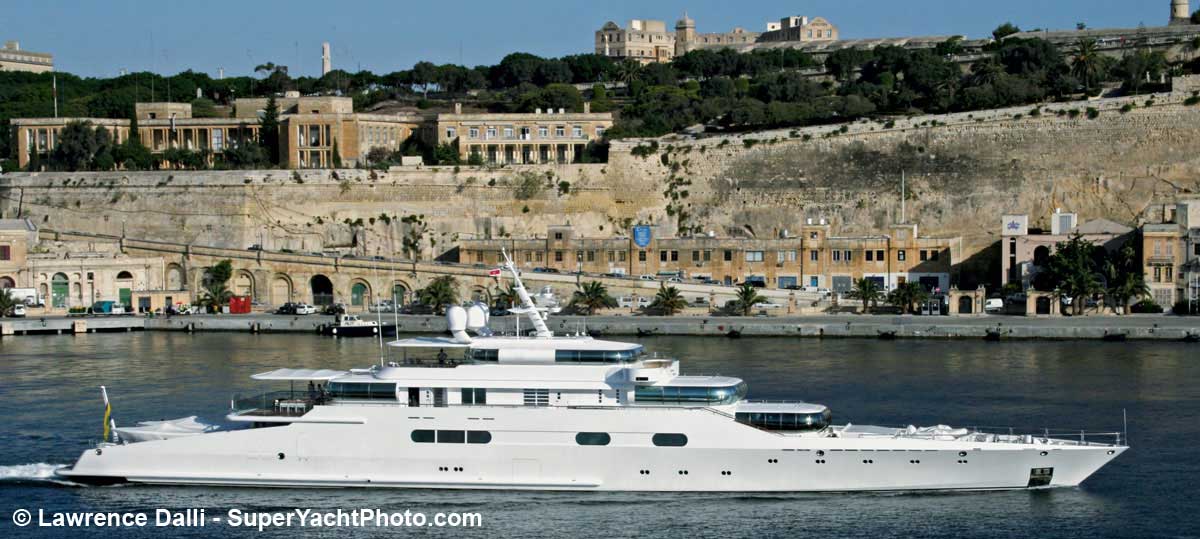
Blohm + Voss built the yacht, originally known as Eco in 1991 for Emilio Azcarraga, a Mexican media magnate. It was a leap forward in the yachting industry in many ways. The innovative Eco was the first pleasure vessel to combine a composite superstructure and a metallic hull, for instance. She also had a futuristic design by Martin Francis, with bubble-like windows all around the front of the superstructure.

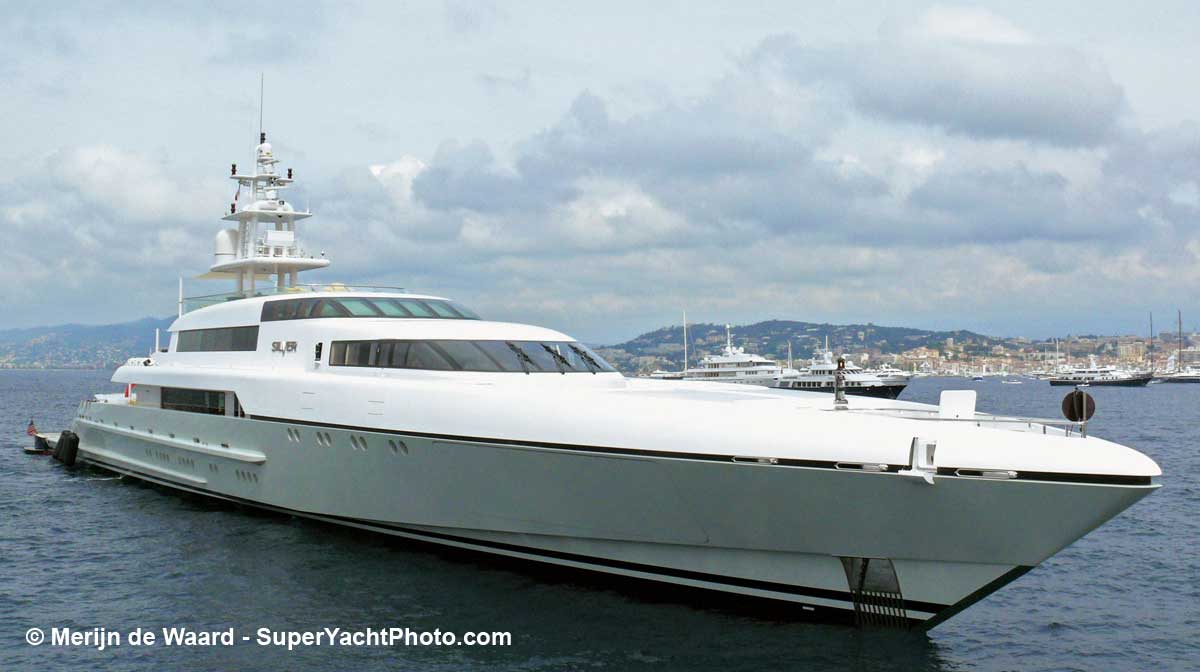
Rabdan-prenamechange-Merijn-de-Waard-SuperYachtPhoto

95: Rabdan

Espen Øino designed this slender and swift semi-displacement yacht, which claimed the title as the world’s longest aluminum motoryacht until the arrival of sistership Silver Zwei, now Dragonfly. The vessel has an aircraft-style interior and displaces just 540 tons, which means that—powered by twin MTU 4000 16V diesels—Rabdan can cross the Atlantic at a swift 18+ knots.

Dragonfly-prenamechange-PeterSeyfferth-theyachtphoto

94: Dragonfly

After her launch in 2009, this slender and contemporary aluminum yacht appeared in Abu Dhabi in time for the Grand Prix. Watchers soon discovered she was none other than Hull No. 2 of Hanseatic Marine’s innovative series (the ex Silver Zwei). Hull No. 1, formerly known as Silver and now called Rabdan, was already in the United Emirates as a new royal yacht.

Siren-PeterSeyfferth-theyachtphoto

93: Siren

Hamburg-based Newcruise designed Siren inside and out, as they did sistership Sapphire and the slightly smaller Triple Seven. Built with transoceanic capability, Siren has a steel hull, aluminum superstructure and reaches a maximum speed of 17.5 knots with a range of 5,000nm thanks to twin MTU 16V4000M60 engines producing 4,520 bhp.

Sapphire

92: Sapphire

If this yacht reminds you of Siren it is no coincidence. These yachts share elegant styling by Newcruise and engineering by Nobiskrug. Nobiskrug’s hull 781 was listed for sale for around $115 million during construction and was reportedly sold for about $110 million to new owners last year through Edmiston.

Mogambo-AndreasJens-theyachtphoto

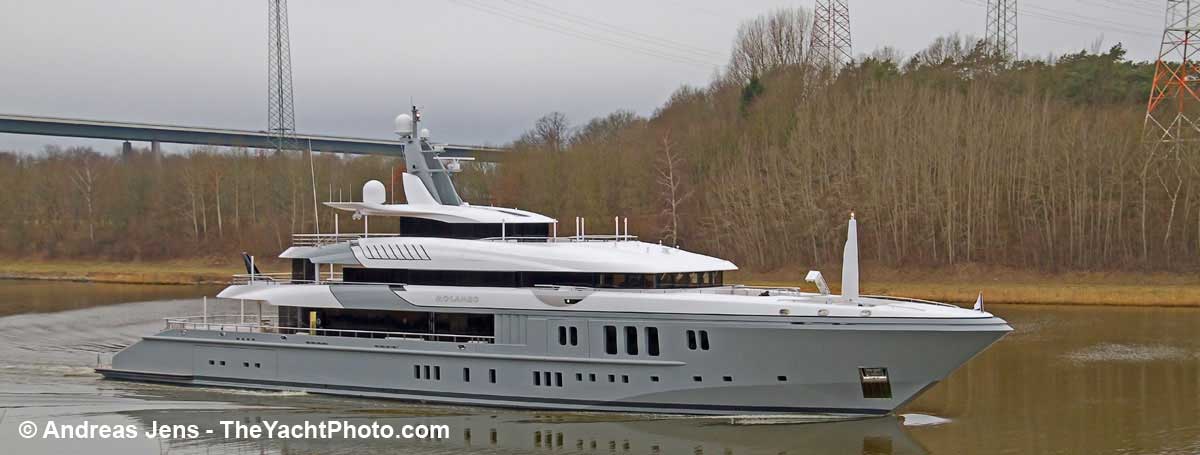
91: Mogambo

What sets apart the world’s very largest yachts? In the case of the new Nobiskrug Mogambo, certainly, sophistication does. Like it or not, the slightly masculine contemporary décor by Reymond Langton Design using two primary woods (sycamore and ebonized walnut) is nothing short of perfection.

Graffiti-CarlGroll-theyachtphoto

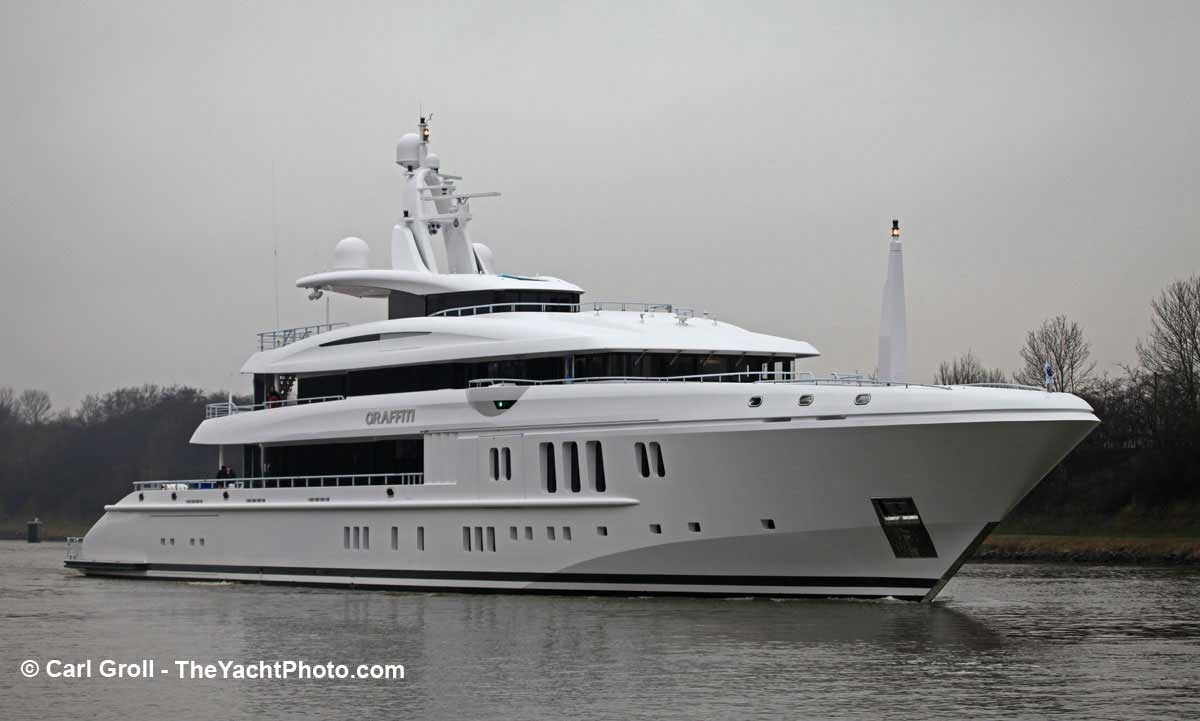
90: Graffiti

She is one of a beautiful series of yachts all built on the same platform at the Nobiskrug shipyard. She was known as project 783 (Mogambo, also on this list, was project 782). She has an interior by Raymond Langdon. The resemblance is not a casual one. Kristal Waters built these sisterships, designed, according to their marketing materials, to fill a niche at the top end of the market.

Pegaso-GiovanniRomero-theyachtphoto

89: Pegaso

Located in Vigo, Spain, the Freire Shipyard, established by Paulino Freire in 1895, specializes in commercial shipbuilding (tugs, fishing boats, patrol vessels, etc.). Little wonder, then, that this expedition-style vessel first managed to avoid scrutiny. Still, the very private Pegaso eventually had to take to the water, which meant that yacht enthusiasts everywhere would try to find out about her.

Ilona-Merijn-de-Waard-SuperYachtPhoto

88: Ilona

Ilona is a well-traveled yacht, extensively photographed from Europe to the Far East, which is not surprising as her owner is an experienced yachtsman. Amels won a bid to build the Australian owner’s new yacht and the shipyard worked closely with project manager Captain Elworth to provide custom features such as a helipad that converts to a hangar.

CocoaBeanRender

87: New Horizon

Trinity Yachts set out to build private yachts a mere 14 years ago in its hometown of New Orleans and opened a second shipyard in nearby Mississippi in 2005 to meet the demand. While at first Trinity’s founding partners set out to fill a niche by building yachts in the 150-foot or so range, the shipyard has since built a number of much larger yachts, many in all aluminum and more recently in steel and with aluminum superstructure.

Enigma-Lawrence-Dalli-SuperYachtPhoto

86: Enigma

Blohm + Voss built the yacht, originally known as Eco in 1991 for Emilio Azcarraga, a Mexican media magnate. It was a leap forward in the yachting industry in many ways. The innovative Eco was the first pleasure vessel to combine a composite superstructure and a metallic hull, for instance. She also had a futuristic design by Martin Francis, with bubble-like windows all around the front of the superstructure.

Advertisement
Advertisement